
The Butterfly Knife is the most sought-after knife in CS2. Its three-stage balisong flip animation *is the longest inspect animation in the game*, and that single detail is why a Butterfly Doppler Phase 2 trades at roughly $1,810 while the same finish on a Bayonet costs $900. There are 24 Butterfly Knife skins in CS2, with prices starting at around $323 for a Safari Mesh in Battle-Scarred and climbing past $10,000 for a Doppler Sapphire or Gamma Doppler Emerald in Factory New.
This page lists every Butterfly Knife finish with real-time market prices, float values and the case each skin drops from. Below you will find a breakdown of the best finishes at every budget, which cases to open, and how float value and pattern seed affect what you pay.
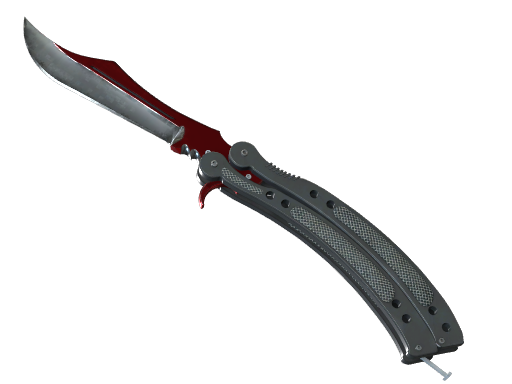 Covert
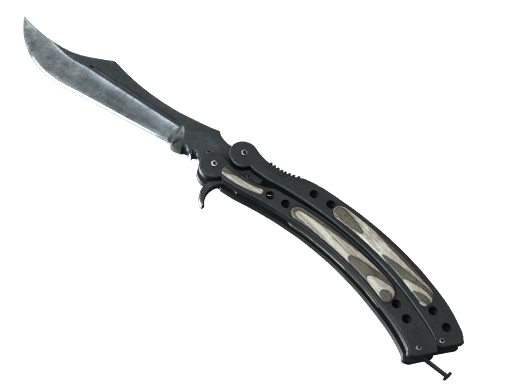 Covert
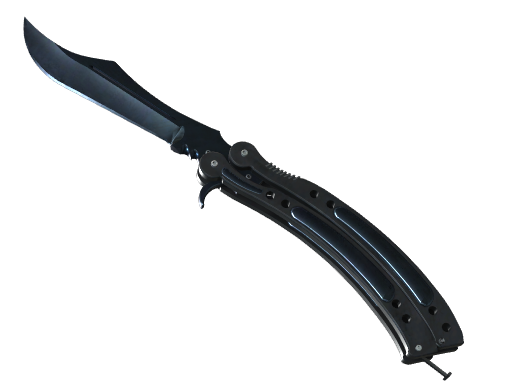 Covert
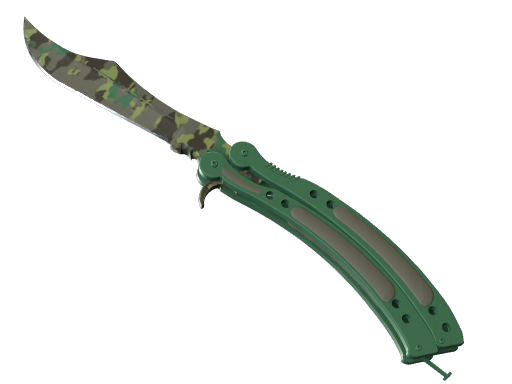 Covert
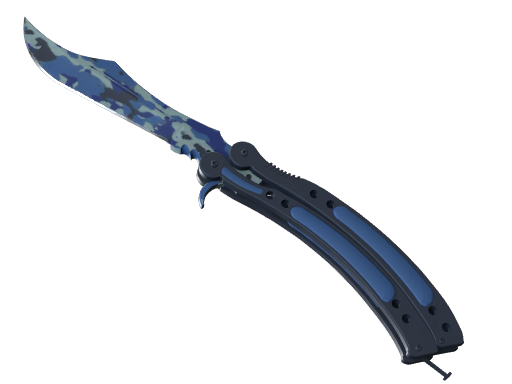 Covert
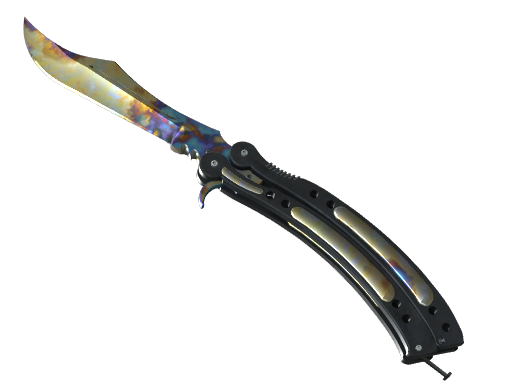 Covert
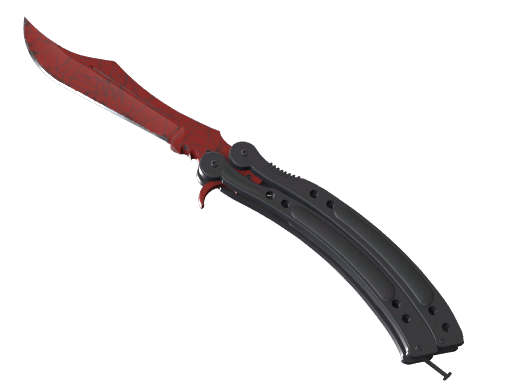 Covert
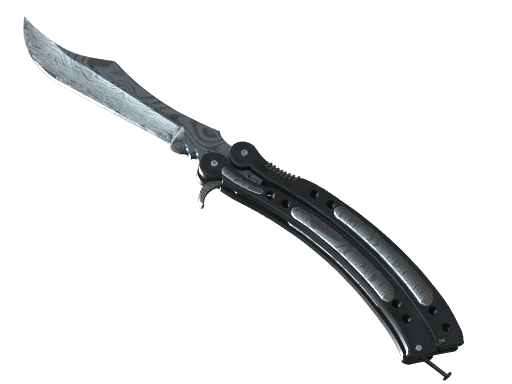 Covert
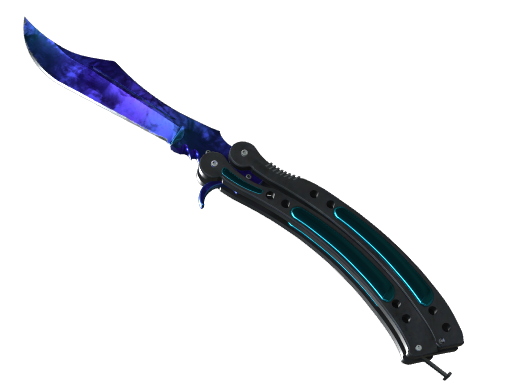 Covert
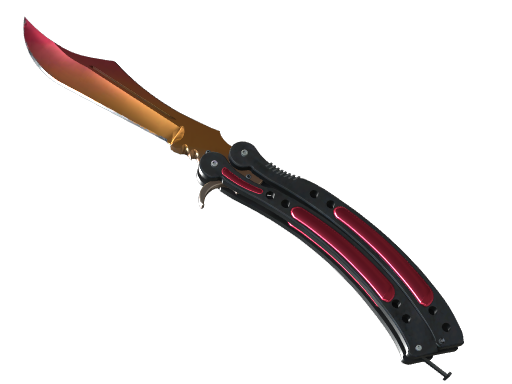 Covert
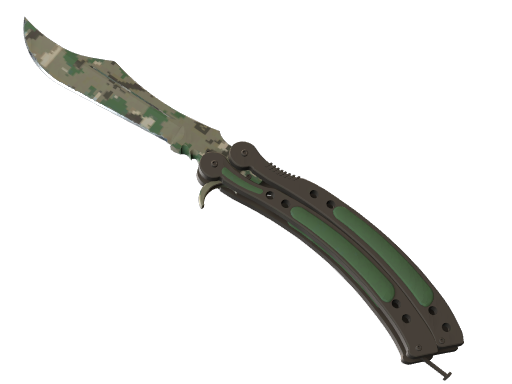 Covert
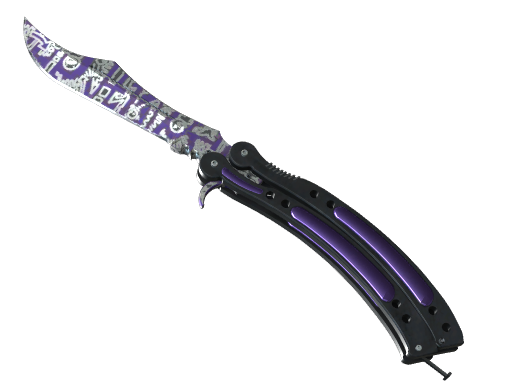 Covert
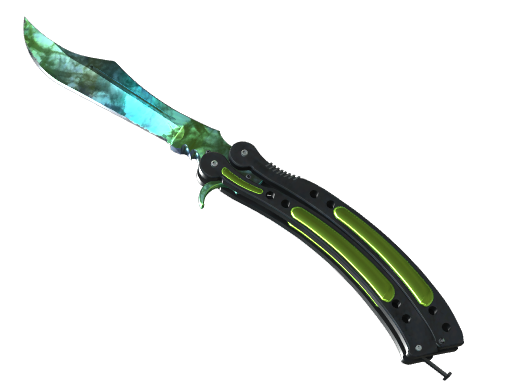 Covert
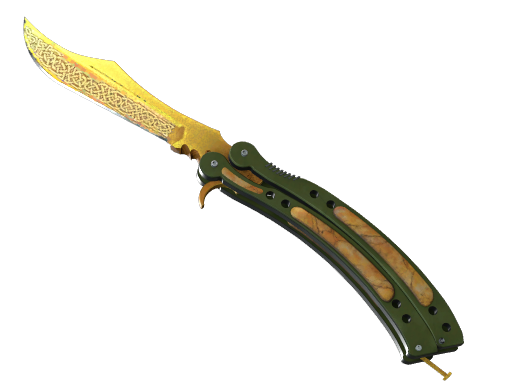 Covert
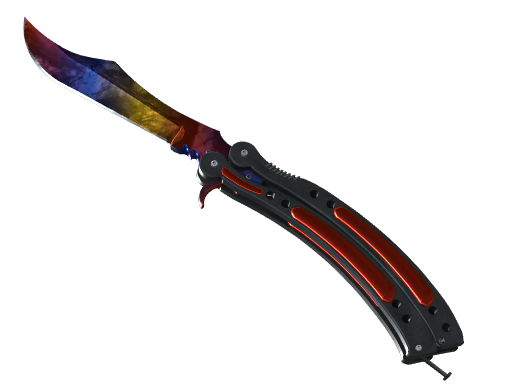 Covert
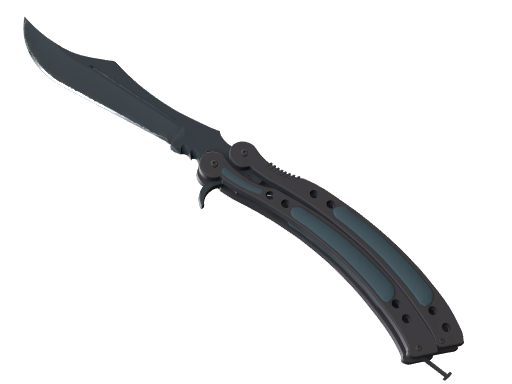 Covert
 Covert
 Covert
 Covert
 Covert
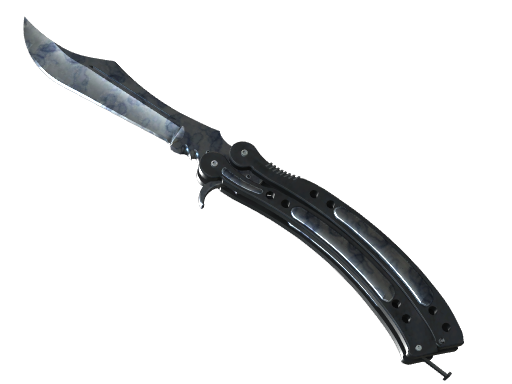 Covert
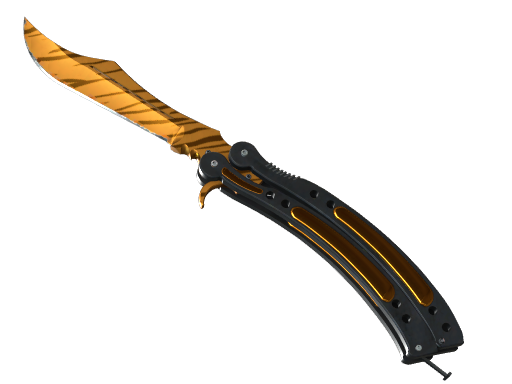 Covert
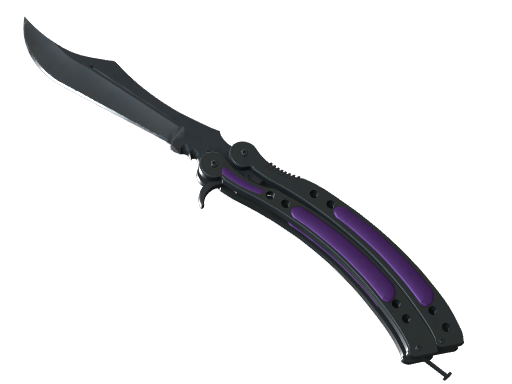 Covert
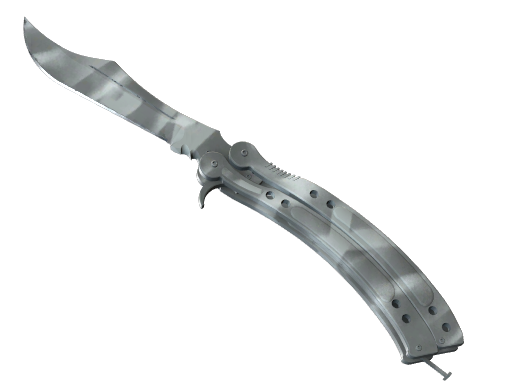 Covert
Valve added the Butterfly Knife to CS:GO in July 2014 with the Operation Breakout update. It was the fifth knife model in the game and the first with a complex multi-stage animation. When you press your inspect key, the blade flips open in a full balisong sequence that takes roughly three seconds to complete. No other knife comes close in animation length or visual flair.
That animation creates a price premium of 20–40% over the same finish on other models. A Butterfly Fade Factory New sits at ~$1,818, while a Huntsman Fade FN is $253 and an M9 Bayonet Fade FN is ~$600. The premium holds across every finish and every exterior condition. Even the cheapest Butterfly skin (Safari Mesh BS at ~$323) costs more than mid-tier finishes on most other knife types.
Only five cases in CS2 history contain the Butterfly Knife, which further limits supply: the Operation Breakout Weapon Case (2014), Spectrum Case (2017), Spectrum 2 Case (2017), Operation Riptide Case (2021), and Dreams & Nightmares Case (2022). The knife drops at the standard ~0.26% rate from each of these.
Every Butterfly Knife skin is Covert (red-tier) rarity with the ★ prefix. The 24 finishes span a massive price range. Here is how they break down from most expensive to most affordable:
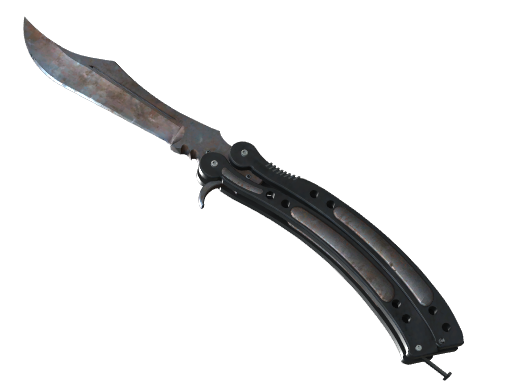
This bracket includes Blue Steel ($665–$1,209), Damascus Steel ($639–$808), Case Hardened ($608–$1,267), Black Laminate ($540–$820), Stained ($529–$801), Freehand ($525–$649), Lore ($482–$2,008), Ultraviolet ($482–$2,813), Bright Water ($470–$599), Night ($469–$1,481), Rust Coat ($473–$588), and Boreal Forest ($411–$650). Case Hardened deserves a special mention: "blue gem" patterns (seeds where the blade is mostly blue) can sell for 5–50x the normal price, with the best Butterfly Blue Gems exceeding $20,000.
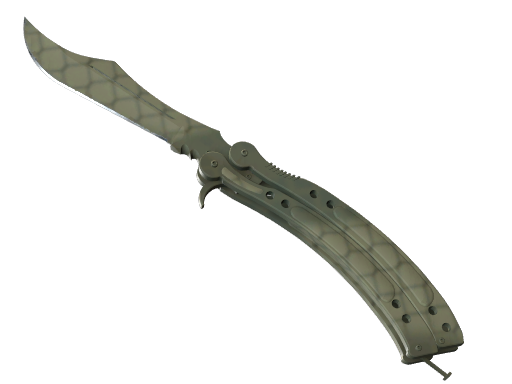
The entry point for a Butterfly Knife in CS2. Safari Mesh ($323–$749) is the cheapest overall. Scorched ($428–$804), Urban Masked ($419–$1,096), and Forest DDPAT ($406–$650) round out the affordable tier. These finishes are less visually striking, but you still get the full balisong animation — and at the end of the day, that is what people pay for.
Operation Breakout Weapon Case
July 2014
Fade, Slaughter, Crimson Web, Case Hardened, Night, Boreal Forest (13 finishes)
Spectrum Case
March 2017
Doppler (all phases + gems), Marble Fade, Tiger Tooth, Damascus Steel, Bright Water, Ultraviolet
Spectrum 2 Case
September 2017
Same Chroma finishes as Spectrum Case
Operation Riptide Case
September 2021
Gamma Doppler (all phases + Emerald), Lore, Autotronic, Black Laminate, Freehand
Dreams & Nightmares Case
January 2022
Gamma Doppler, Lore, Autotronic (same pool as Riptide)
The Operation Breakout Case is the original source with the widest variety of finishes (13 total). If you specifically want a Doppler, Marble Fade or Tiger Tooth, you need to open a Spectrum or Spectrum 2 Case. For Gamma Doppler (including the Emerald), target the Operation Riptide Case or Dreams & Nightmares Case. All five cases are available on the Steam Community Market; the Dreams & Nightmares Case is currently the cheapest per key.
Float value determines the exterior condition of a skin. Butterfly Knives follow the standard five-tier system: Factory New (0.00–0.07), Minimal Wear (0.07–0.15), Field-Tested (0.15–0.38), Well-Worn (0.38–0.45), and Battle-Scarred (0.45–1.00). The price gap between FN and BS varies by finish — on a Crimson Web it can be 8x, on a Tiger Tooth it is only about 10%.
Some finishes have restricted float ranges. Crimson Web, for example, has a minimum float of 0.06, which means there is no such thing as a truly clean 0.00 copy. That scarcity is why FN Crimson Web Butterfly Knives are among the rarest and most expensive knife skins in CS2.
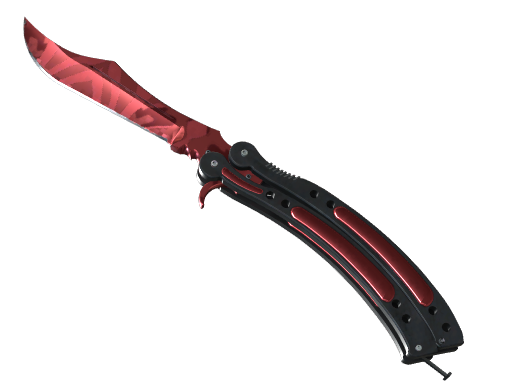
Pattern seed matters most on three finishes. On Case Hardened, the seed determines how much blue appears on the blade — blue gem patterns (high blue coverage) can be worth 5–50x more than a standard pattern. On Fade, the seed controls the fade percentage; a full 100% fade where yellow extends to the blade tip is worth significantly more than an 80% fade. On Marble Fade, the fire and ice pattern (red and blue only, no yellow) is the holy grail — a true fire and ice can trade for 2–3x the standard price.
Picking the right Butterfly Knife depends on your budget and what you value — visual impact, trading liquidity, or long-term value retention.
Gloves and knives are visible at the same time in first person. A coordinated pair is one of the biggest visual upgrades in CS2. Here are the most popular Butterfly Knife and glove combos at different price points:
Butterfly Knives are among the most liquid items in the CS2 skin economy. Their consistent demand means you can buy and sell without the wide bid-ask spreads that affect niche knife models. On third-party marketplaces, Butterfly Knives typically trade within 2–5% of their listed price, compared to 5–10% for less popular models like the Navaja or Survival Knife.
Historically, Butterfly Knife prices have trended upward as CS2 player counts grow and the supply of older cases diminishes. The Operation Breakout Case, which is no longer dropped in-game, has seen its Butterfly finishes appreciate steadily. That said, new case releases (like a future case containing Butterfly Knives) can temporarily suppress prices by increasing supply.
For investment, the safest picks are high-float-sensitivity skins in FN condition (Crimson Web, Ultraviolet, Night) and rare pattern seeds (Case Hardened blue gems, Fade 100%, Marble Fade fire and ice). These have the smallest supply and the most collectors competing for them.
Prices range from ~$323 (Safari Mesh Battle-Scarred) to over $10,000 (Doppler Sapphire/Ruby Factory New). The median Butterfly Knife sells for around $600–800.
The Butterfly Knife Safari Mesh in Battle-Scarred, currently around $323. Boreal Forest BS (~$406) and Forest DDPAT BS (~$406) are close alternatives.
Three ways: open one of the five cases that contain it (Operation Breakout, Spectrum, Spectrum 2, Operation Riptide, Dreams & Nightmares) at the ~0.26% drop rate; buy one on the Steam Community Market or a third-party marketplace; or craft one through a trade-up contract using 10 Covert-rarity skins.
Three factors: the balisong flip animation (the most elaborate in CS2), limited supply (only five cases ever), and consistently high demand from both players and traders. The Butterfly Knife has been the most popular knife model in CS2 for years.
Doppler Phase 2 and Tiger Tooth are the most liquid. They have stable prices, consistent demand, and tight bid-ask spreads on every major marketplace.
Most Butterfly Knife skins have appreciated over the long term as CS2 grows and older case supplies shrink. Factory New copies of rare finishes (Crimson Web, Ultraviolet, Case Hardened blue gems) have shown the strongest growth. However, prices can dip short-term when new cases enter the market.