
The Karambit is the most iconic knife in Counter-Strike history. Its curved blade and finger-ring design create a signature twirl inspect animation that has made it the aspirational knife for CS2 players since 2013. There are 24 Karambit skins in CS2, with prices starting at around $360 for a Safari Mesh in Battle-Scarred and stretching into the millions for the rarest Case Hardened Blue Gem patterns.
This page lists every Karambit finish with live market prices, float values and drop sources. Below you will find a complete breakdown of every finish tier, the cases that drop Karambits, how pattern seeds drive value, and which skins offer the best value at your budget.
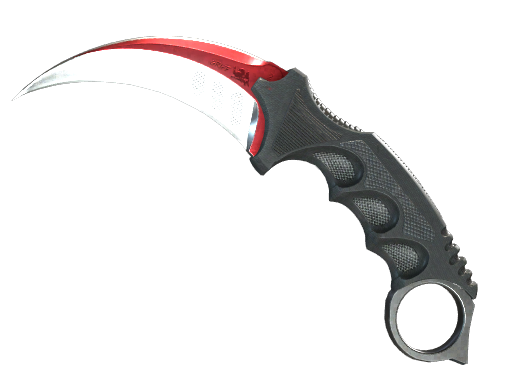 Covert
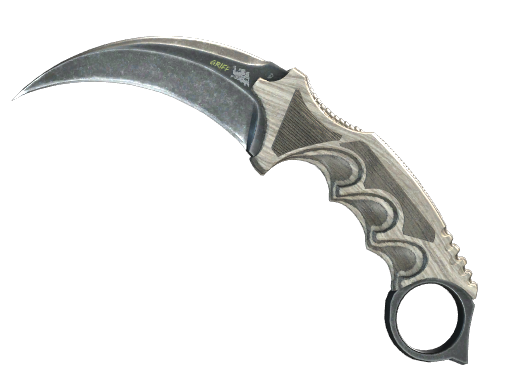 Covert
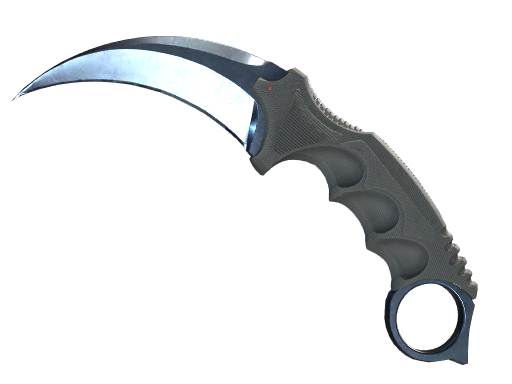 Covert
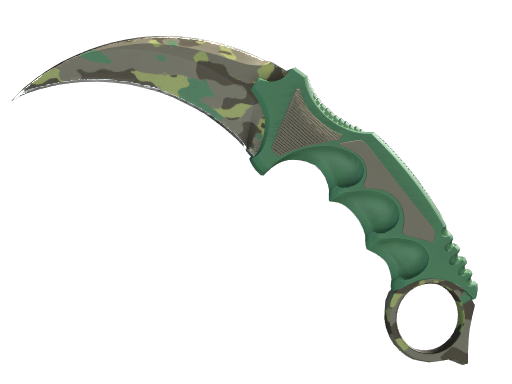 Covert
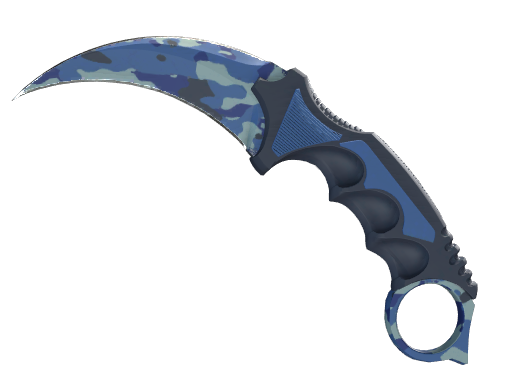 Covert
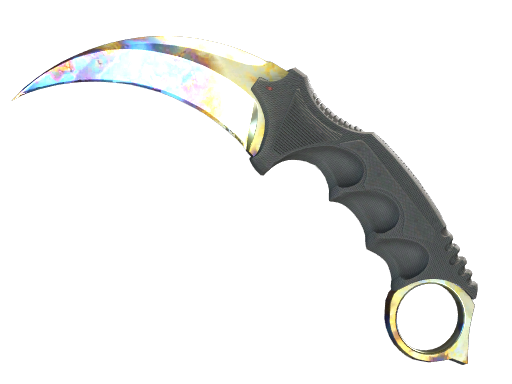 Covert
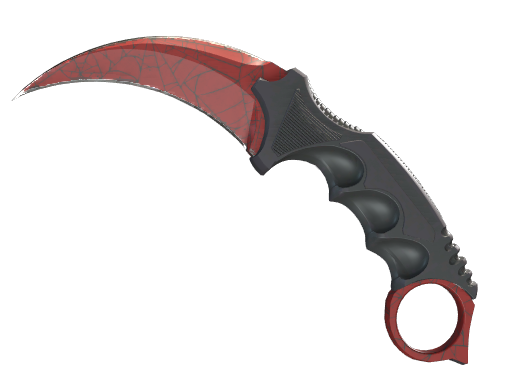 Covert
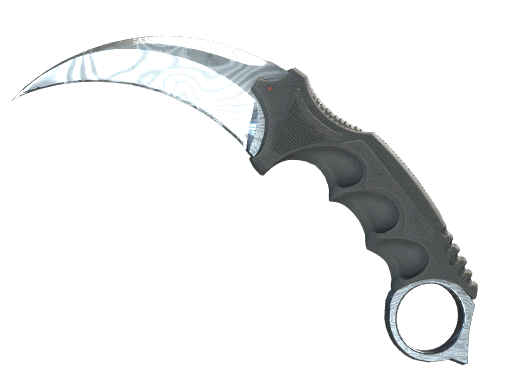 Covert
 Covert
 Covert
 Covert
 Covert
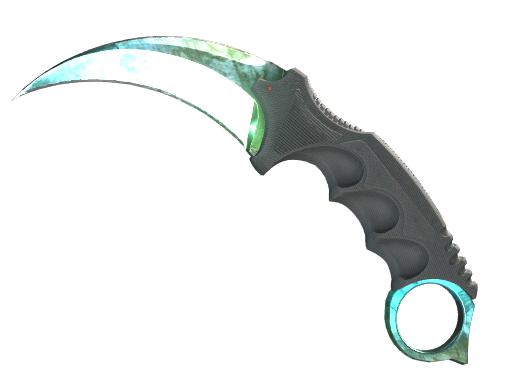 Covert
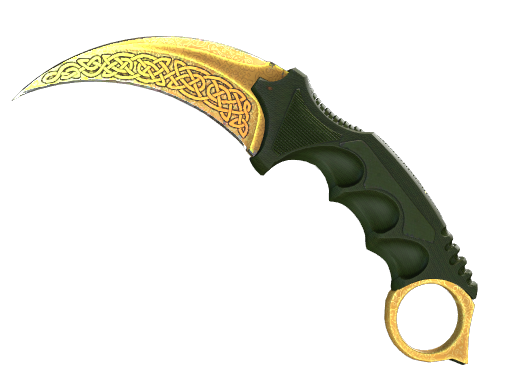 Covert
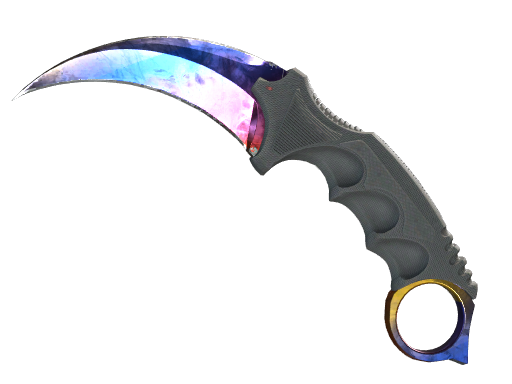 Covert
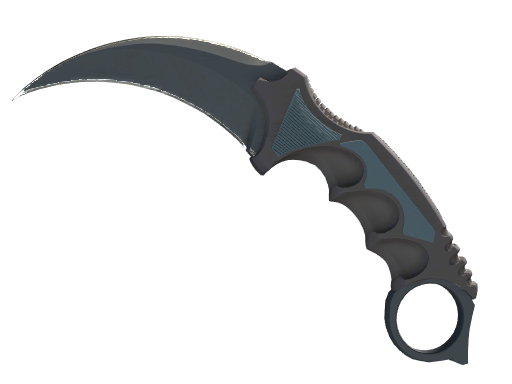 Covert
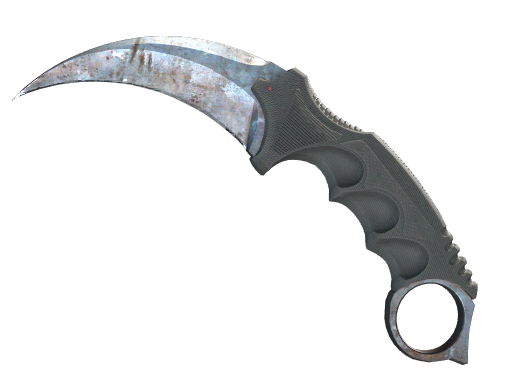 Covert
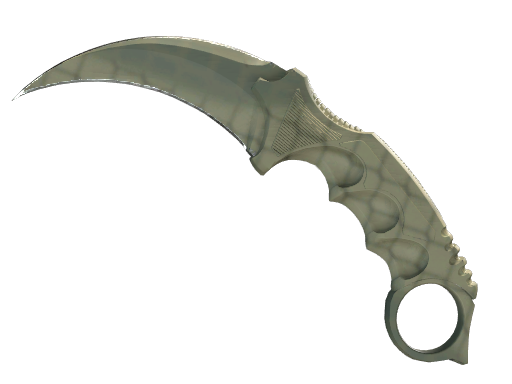 Covert
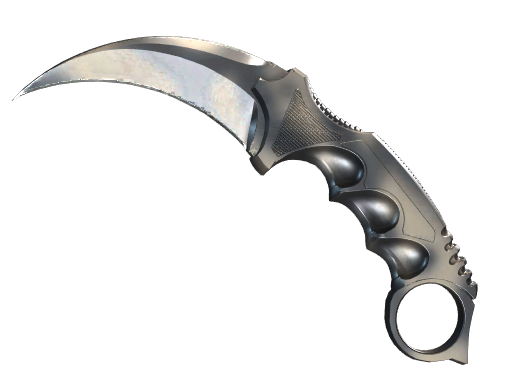 Covert
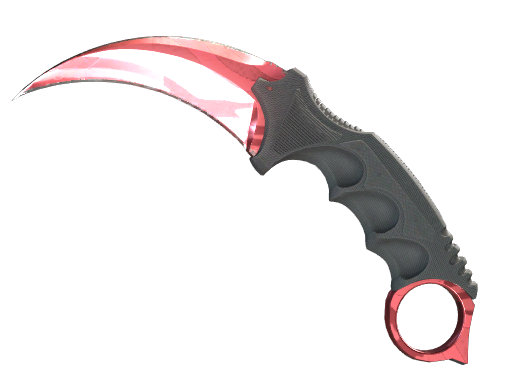 Covert
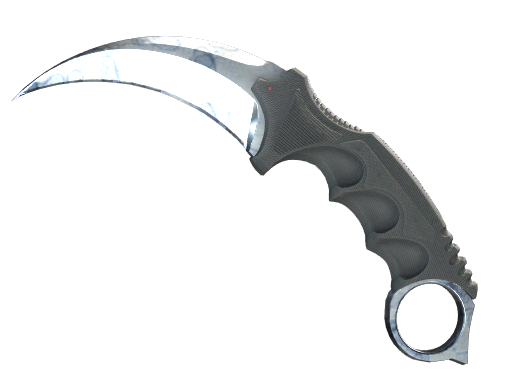 Covert
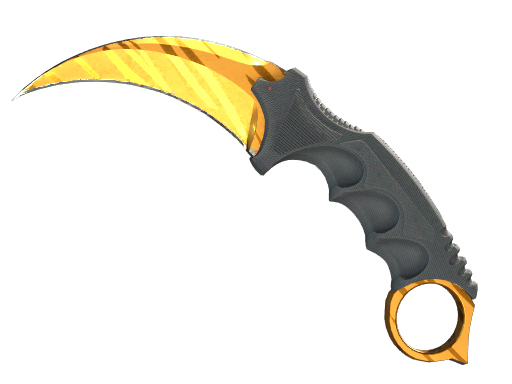 Covert
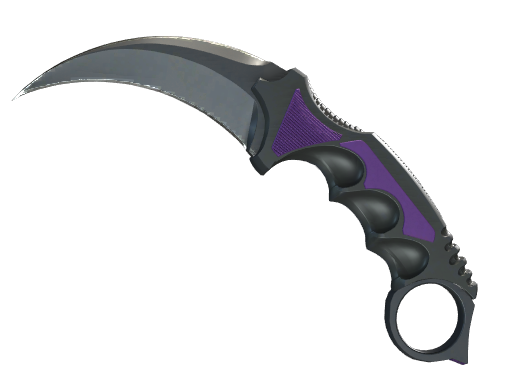 Covert
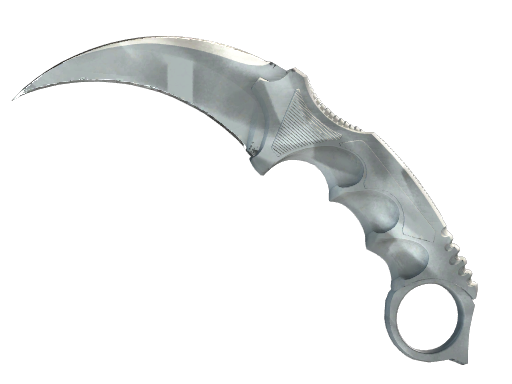 Covert
Valve introduced the Karambit alongside the Arms Deal update in August 2013, making it one of the original five CS:GO knife models. Its design is based on a real-world Southeast Asian curved fighting knife, held in a reverse grip with the blade curving away from the user. The in-game model features a finger ring that spins during the inspect animation — a smooth, infinite-loop twirl that no other knife replicates.
That animation, combined with the blade’s unique silhouette, has given the Karambit cult status in the CS2 community. Even the cheapest Karambit costs more than mid-range finishes on most other knife types. A Safari Mesh BS Karambit (~$360) costs more than a Bayonet Doppler Phase 1 (~$390) — and the Bayonet Doppler is considered a premium skin on that model.
The Karambit is also home to the single most expensive skin in CS2: the Case Hardened pattern #387 (Blue Gem), which has had private-market valuations exceeding $1.5 million. No other knife model comes close to that ceiling.
Every Karambit skin is Covert rarity with the ★ prefix. The 24 finishes fall into three groups based on which case pool they belong to: Original (13 finishes), Chroma (6 finishes) and Gamma (5 finishes).
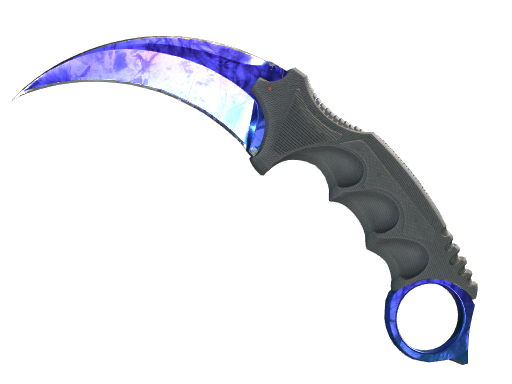
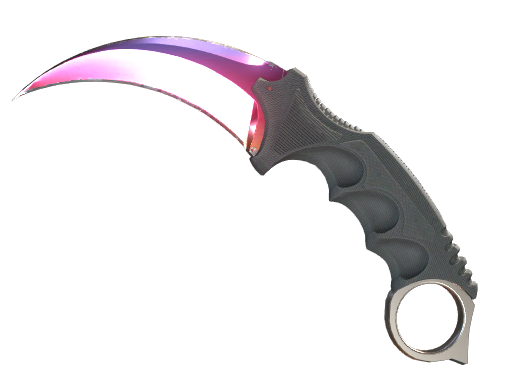
This bracket includes Gamma Doppler ($750–$1,100; Emerald $3,500+), Tiger Tooth ($670–$850), Slaughter ($580–$900), Autotronic ($490–$850), Lore ($420–$1,100), and Damascus Steel ($420–$520). Tiger Tooth is the standout here: no pattern variation, consistent pricing, and a bright gold finish that looks clean on the curved blade. For Slaughter, centered diamond and heart patterns add 20–50% to the base price.
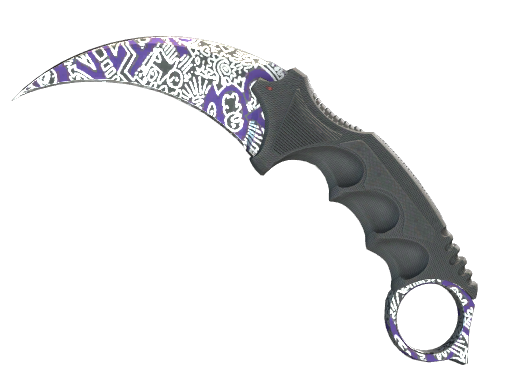
Blue Steel ($450–$900), Ultraviolet ($420–$1,200), Night ($400–$2,500+), Black Laminate ($470–$650), Bright Water ($400–$520), Freehand ($410–$510), Stained ($410–$700), and Rust Coat ($365–$415). Night FN deserves special attention: it is one of the rarest knife skins in CS2 due to its restricted float range, with FN copies exceeding $2,500.
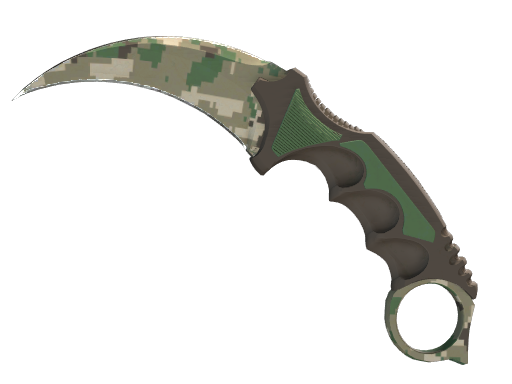
The entry-level Karambits: Safari Mesh (~$360 BS), Boreal Forest (~$370 BS), Scorched (~$375 BS), Forest DDPAT (~$380 BS), and Urban Masked (~$385 BS). These finishes are visually muted, but you still get the full Karambit model with its curved blade and twirl animation. For many players, that is worth the premium over a flashier skin on a cheaper knife model.
The Karambit drops from 16 different cases in CS2 — more than any other knife model. These are split into three finish pools:
Original (13 skins)
CS:GO Weapon Case, eSports 2013, eSports 2013 Winter, eSports 2014 Summer, Operation Bravo, Winter Offensive, Operation Phoenix, Operation Vanguard, Huntsman, Falchion, Shadow, Revolver
Fade, Slaughter, Crimson Web, Case Hardened
Chroma (6 skins)
Chroma Case, Chroma 2 Case, Chroma 3 Case
Doppler (all phases + gems), Marble Fade, Tiger Tooth
Gamma (5 skins)
Gamma Case, Gamma 2 Case
Gamma Doppler (+ Emerald), Lore, Autotronic
All cases share the same ~0.26% knife drop rate, but because each case contains multiple knife models, the actual chance of unboxing a Karambit specifically is roughly 1 in 2,500. If you want a Doppler or Marble Fade, you specifically need a Chroma case. For Gamma Doppler (including the Emerald), only Gamma and Gamma 2 cases work.
Pattern seeds matter more on Karambits than almost any other knife because the curved blade gives the play side high visibility. Three finishes are heavily pattern-dependent:
Float value determines exterior condition: Factory New (0.00–0.07), Minimal Wear (0.07–0.15), Field-Tested (0.15–0.38), Well-Worn (0.38–0.45) and Battle-Scarred (0.45–1.00). On Karambits, the curved blade makes wear very visible — scratches on the play side are impossible to miss.
Some Karambit finishes have restricted float ranges that create artificial scarcity. Crimson Web has a minimum float of 0.06, so true 0.00 copies do not exist. Night has a similar restriction. These constraints make Factory New copies of these finishes exceptionally rare and expensive — a Night FN Karambit can cost $2,500+ while a BS copy is $400.
For finishes without pattern variation (Tiger Tooth, Damascus Steel, Rust Coat), the FN-to-BS spread is relatively small — typically 20–40%. But for pattern-dependent finishes like Crimson Web and Night, the spread can be 5–10x or more.
Karambits are among the most traded knives in CS2. Their name recognition and consistent demand make them highly liquid across all major marketplaces. Doppler, Fade and Tiger Tooth have the tightest bid-ask spreads, typically trading within 2–4% of listed price.
Historically, Karambit prices have tracked the overall CS2 skin market closely. Major price movements tend to coincide with CS2 updates, Major tournament sticker releases, and new case drops. The original Karambit finishes (from cases like Operation Bravo and the original CS:GO Weapon Case) have appreciated as those cases become scarcer.
For long-term investment, the strongest picks are FN copies of float-restricted finishes (Crimson Web, Night, Ultraviolet) and Case Hardened blue gems. These have the smallest supply and the most collectors competing for them. Standard finishes like Safari Mesh or Scorched are less likely to appreciate meaningfully because supply remains relatively high.
Prices start at ~$360 (Safari Mesh BS) and go past $5,000 for gem-tier Dopplers. Case Hardened blue gems can reach $30,000–$1,500,000+ for top-tier patterns. The median Karambit trades at $500–$700.
The Karambit Safari Mesh in Battle-Scarred at approximately $360. Boreal Forest BS (~$370) and Rust Coat BS (~$365) are close alternatives.
16 cases in total, divided into three finish pools: 11 cases for the Original finishes (13 skins), 3 Chroma cases for Chroma finishes (6 skins including Doppler and Marble Fade), and 2 Gamma cases for Gamma finishes (5 skins including Gamma Doppler).
A Karambit Case Hardened with a pattern seed that produces high blue coverage on the play side. The community rates these in tiers: Tier 1 (most blue, rarest, most expensive) through Tier 5. Pattern #387 is the most famous Blue Gem and the most valuable CS2 skin in existence.
Three factors: the iconic twirl animation, being one of the original CS:GO knives (10+ years of brand recognition), and dropping from 16 cases which means a large, established collector base. The curved blade also shows off finishes and patterns better than straight-blade models.
Both are top-tier. The Butterfly Knife has a flashier inspect animation (balisong flip) and higher base prices. The Karambit has the twirl animation, a more aggressive in-hand look, and the highest price ceiling in CS2 (Case Hardened Blue Gem). The Butterfly is more popular for animation; the Karambit is more popular among collectors. It comes down to personal preference.